March 24, 2026
HJFMRI Ltd/Gte Nigeria is part of a laboratory-based surveillance study focused on antimicrobial resistance (AMR) among military and civilian populations across Nigeria. Working alongside the Walter Reed Army Institute of Research-Africa (WRAIR-Africa) and the Nigerian Ministry of Defence Health Implementation Program, HJFMRI trains field and laboratory staff on collection of clinical samples and data at participating sites. This ongoing study was launched in 2024.
AMR poses a significant risk to force health protection and global health security because it can complicate the treatment of wounds, infections, and other medical conditions. Results from this surveillance study will inform decision‑making on antimicrobial stewardship, infection prevention and control, and risk mapping. This work is part of the U.S. Defense Health Agency Armed Forces Health Surveillance Division – Global Emerging Infections Surveillance (GEIS) program.
At six military health facilities in Nigeria, researchers collect samples from patients presenting with infected wounds from surgical-site infections, skin and soft-tissue infections, and other clinically significant bacterial infections. Site laboratory teams conduct preliminary testing and identification of isolates, and some bacterial samples are then shipped to the Defence Reference Laboratory (DRL) in Abuja for confirmation of bacterial species and antibiotic susceptibility. The Nigeria team worked closely with the AMR team from Kenya, led by Dr. Lillian Musila, to develop this work, an example of cross-network capacity strengthening and tech transfer.
Researchers also send a subset of isolates from the study to the WRAIR Multidrug‑Resistant Organism Repository and Surveillance Network (MRSN) laboratory in Silver Spring, Md., for whole‑genome and targeted sequencing to characterize resistance mechanisms, virulence factors, and transmission patterns. This study has already detected a strain of E. coli in the region that is resistant to the last line of antibiotic treatments, underscoring the need for ongoing AMR surveillance.
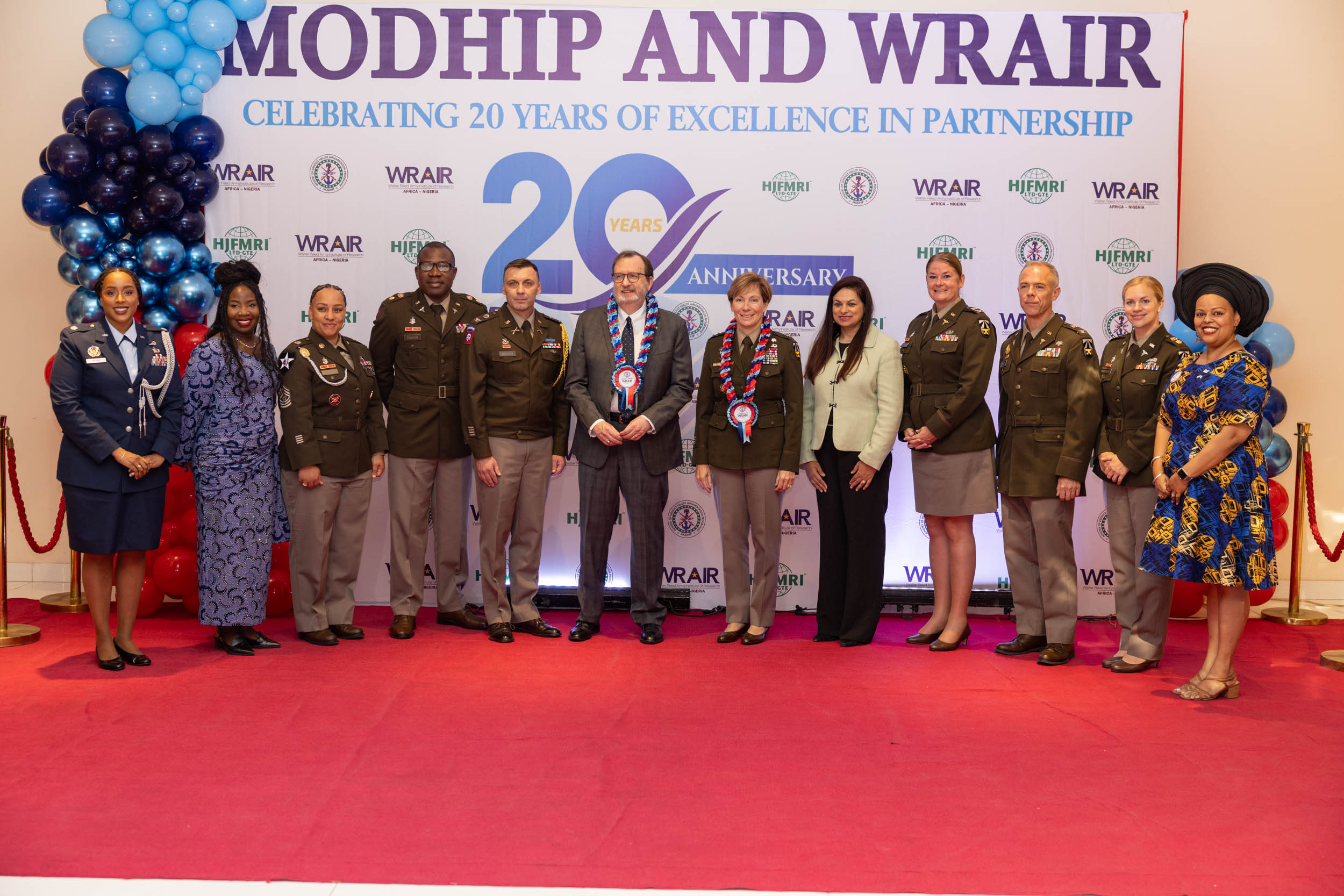
This program builds on a long-standing partnership between WRAIR and the Nigerian Ministry of Defence. HJFMRI has supported research and global health programs as part of this team since 2005, and has partnered with GEIS on infectious disease in other parts of Africa, including Kenya, Uganda, Somalia and Tanzania, for more than a decade.